

Our Landscape

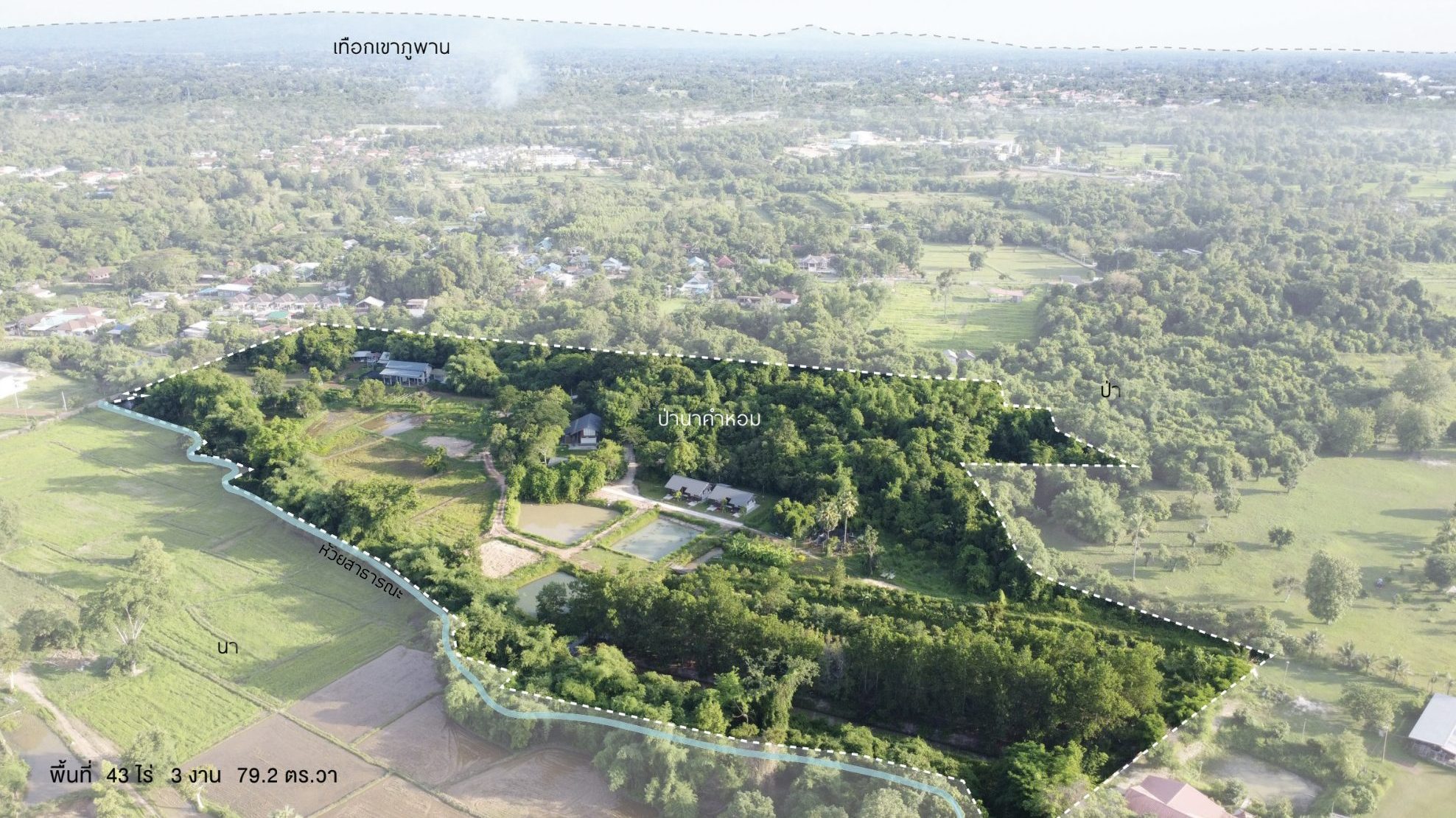
ป่าผืนเล็ก ๆ นี้สัมพันธ์กับภูพาน หนองหาร และแม่น้ำโขง โดยด้านทิศตะวันตกมีภูพานโอบล้อม มีทั้งป่าดิบแล้ง ป่าเบญจพรรณ ป่าโคก ผสมผสานกัน ลดหลั่นลงมาสู่ “ป่านาคำหอม” ด้านทิศตะวันออก โดยมีโคก เนินต่าง ๆ จากเชิงภูพาน พาน้ำจากห้วยเล็ก ๆ สองสามสายไหลมาบรรจบกันบริเวณ “ป่านาคำหอม” ซึ่งเป็นป่าดิบแล้งผืนย่อม (Dry evergreen forest) ผสมป่าเบญจพรรณ หรือที่ชาวอีสานเรียกว่า “ดง” ในพื้นที่ป่าประมาณ 20 ไร่ มีพรรณไม้เด่นๆ ที่พบ เช่น ไม้ยางนา ประดู่ ตะเคียนทอง กะบาก ยางกราด ก่อ บริเวณขอบ ๆ ดงนั้น ล้อมรอบด้วย “ป่าโคก” (ป่าเต็งรัง) มีต้นข่อย แดง ยางเหียง พยุง ตะแบก ติ้วแดง เป็นต้น ขณะที่บางส่วนเป็น “คำ” หรือน้ำซับซึมในพื้นที่น้ำท่วมถึงเป็นครั้งคราว (โคกทาม) มีต้นไม้ เช่น ไผ่ป่า หว้านา มะพอก เสม็ดแดง และพืชล้มลุก เช่น บอน ผักหนาม เอนอ้า ตาเป็ดตาไก่ และเฟิร์นต่าง ๆ ก่อนน้ำจากป่านาคำหอมจะไหลสู่ห้วยโมงน้อย และไหลลงไปยังลำห้วยโมง หนึ่งในห้วยหลายสายที่ไหลลงหนองหาร ทะเลสาบน้ำจืดที่ใหญ่ที่สุดในภาคอีสาน
บริเวณหนองหารมีสภาพนิเวศเป็นพื้นที่ราบน้ำท่วมถึง (Wetland) มีน้ำขึ้นน้ำลงตามฤดูกาล รอบๆ หนองหารเป็นป่าบุ่งป่าทาม (Freshwater Swamp Forest) เชื่อมต่อกับลำน้ำก่ำที่ไหลลงสู่แม่น้ำโขง (The Mekong River)
“ป่านาคำหอม” เป็นรอยต่อทางนิเวศเล็ก ๆ ที่เหลืออยู่ (Remnant patch) จากพื้นที่รอบ ๆ ที่มีการรบกวนใช้ประโยชน์หลายรูปแบบมานาน เป็นส่วนเล็ก ๆ ส่วนหนึ่งที่เชื่อมโยงกับระบบนิเวศลุ่มน้ำโขง (The Mekong River Basin Ecosystem) อันไพศาลแห่งเอเชียตะวันออกเฉียงใต้
คำบรรยายนิเวศ “ป่านาคำหอม” เชื่อมโยงกับภูพาน หนองหาร แม่น้ำโขง โดย บำเพ็ญ ไชยรักษ์ ต้นฉบับภาพประกอบคำบรรยาย โดย อาจารย์อมฤต หมวดทอง
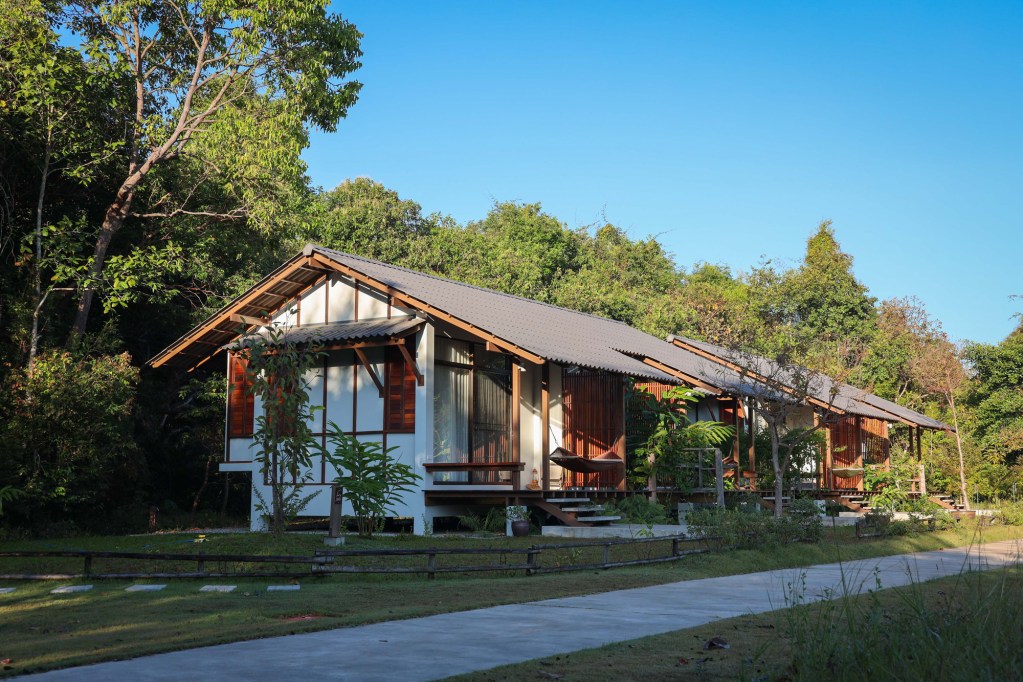
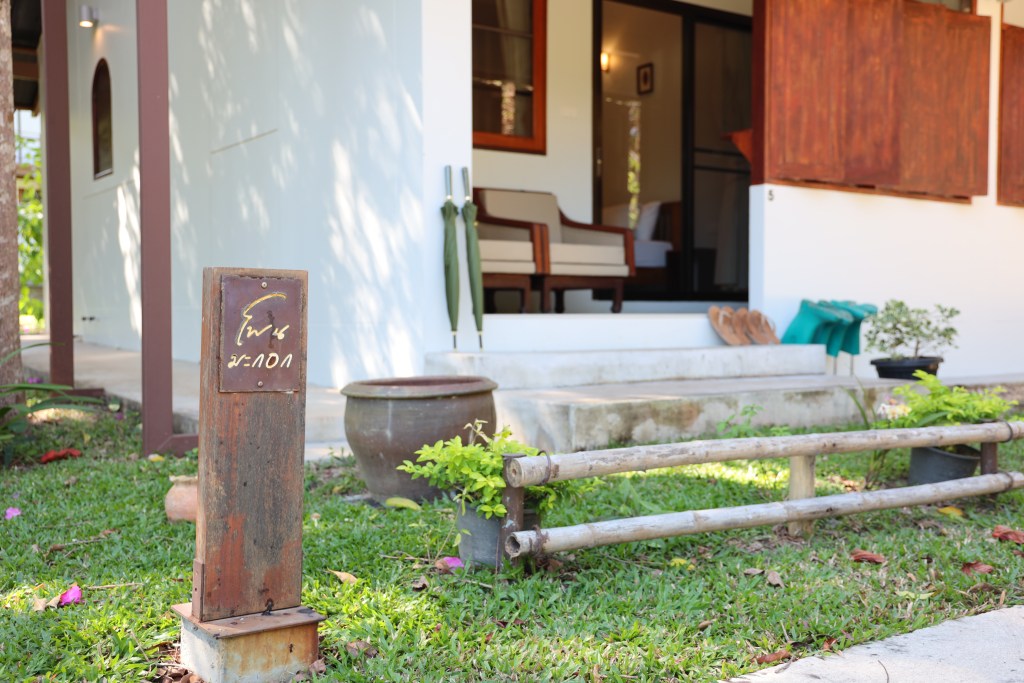
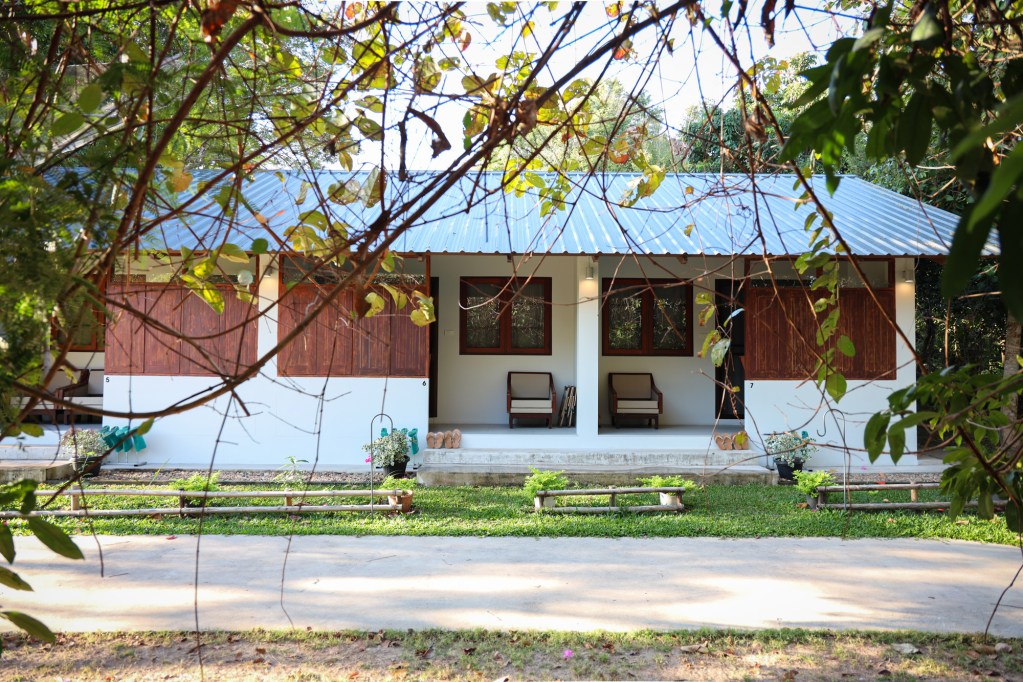
Pa Na Come Home covers around 43 rai and is located within Sakon Nakhon Municipality. It is about 15 minutes by car from the airport and 10 minutes from the bus terminal.
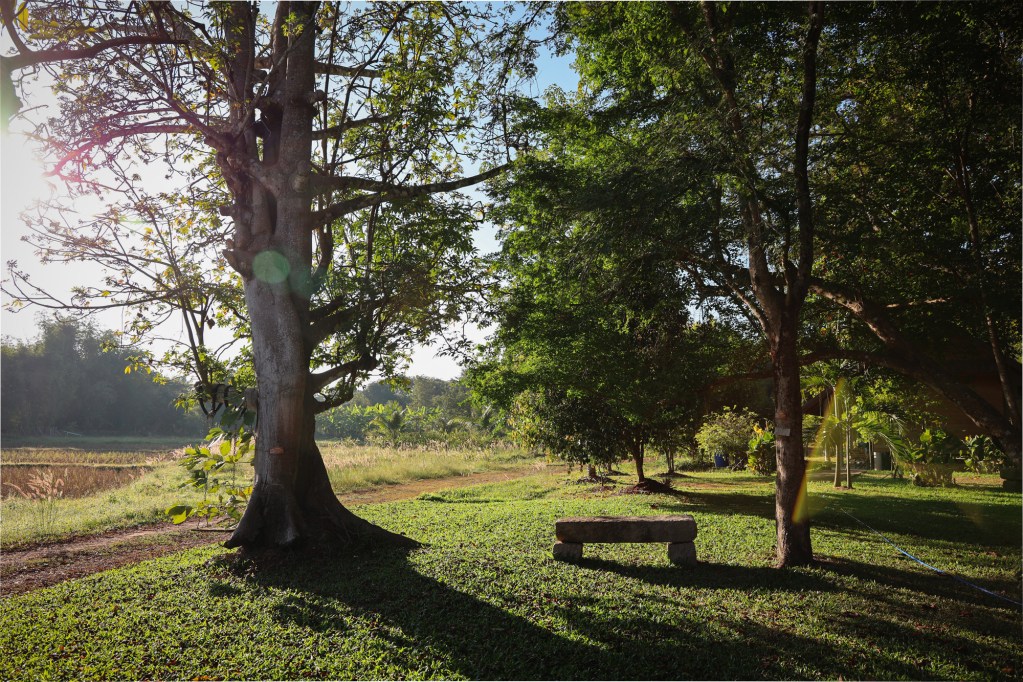
This small forest is part of a larger living landscape connected to the Phu Phan range, Nong Han, and the Mekong River.
To the west, the Phu Phan mountains embrace the area. From their slopes, a mosaic of dry evergreen forest, mixed deciduous forest, and dry dipterocarp forest gradually descends eastward toward Pa Na Come Home. Low ridges and mounds at the foot of the hills guide water from a few small streams, which meet in this area.
At the heart of Pa Na Come Home is around 20 rai of dry evergreen forest, mixed with deciduous forest, a type of woodland known locally in Isan as dong. Prominent tree species found here include yang na, pradu, takhian thong, kabak, yang krad, and ko.
Around the edges of the dong is pa khok, or dry dipterocarp forest, where species such as khoi, daeng, yang hiang, phayung, tabaek, and tio daeng can be found.
Some parts of the land are also kham: areas of natural seepage and seasonally flooded ground. These transitional areas support species such as wild bamboo, wa na, mapok, and samet daeng, along with ground plants including bon, phak nam, en ao, ta pet ta kai, and various ferns.
From Pa Na Come Home, water flows onward into Huai Mong Noi, then into Huai Mong, one of several streams feeding Nong Han, the largest freshwater lake in northeastern Thailand. The Nong Han area is a seasonally flooded wetland ecosystem, where water rises and falls with the seasons. Around the lake are freshwater swamp forests, which connect further to the Lam Nam Kam and eventually to the Mekong River.
“Pa Na Come Home” is a small remnant patch of ecological land, one of the few pieces still remaining after the surrounding area has long been shaped by many forms of human use. Though small, it is still part of the vast Mekong River Basin ecosystem of mainland Southeast Asia.


The Impermanent Use of Our Land
ป่านาคำหอม มีพื้นที่ทั้งหมดประมาณ 43 ไร่ โดยเราแบ่งการดูแลออกเป็น 4 แบบ
Pa Na Come Home spans around 43 rai, and we care for the land through four overlapping ways of use.


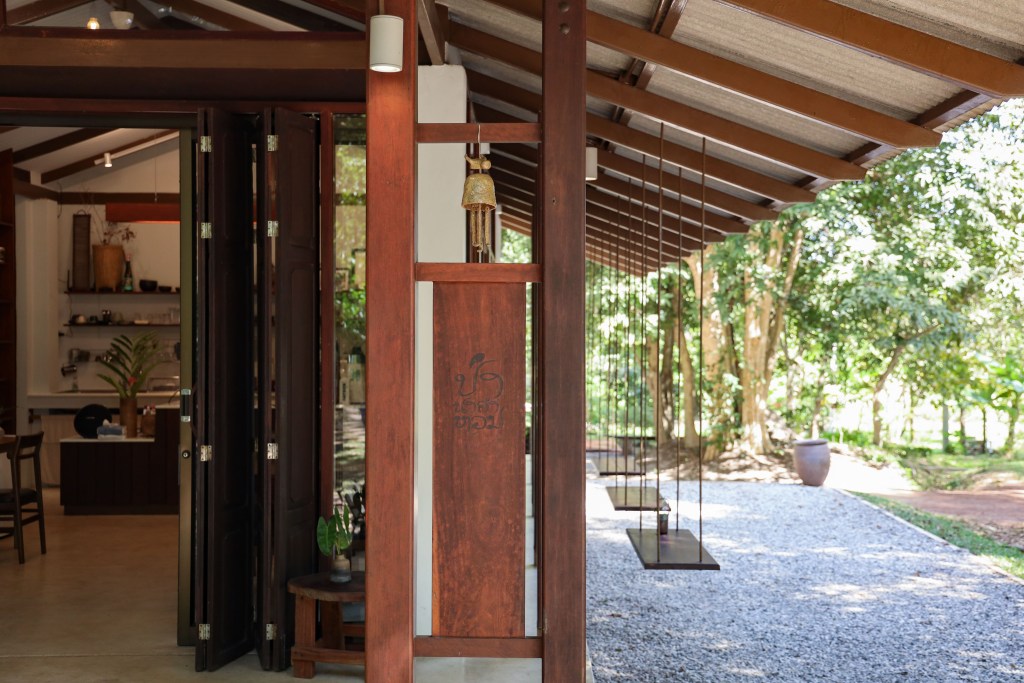
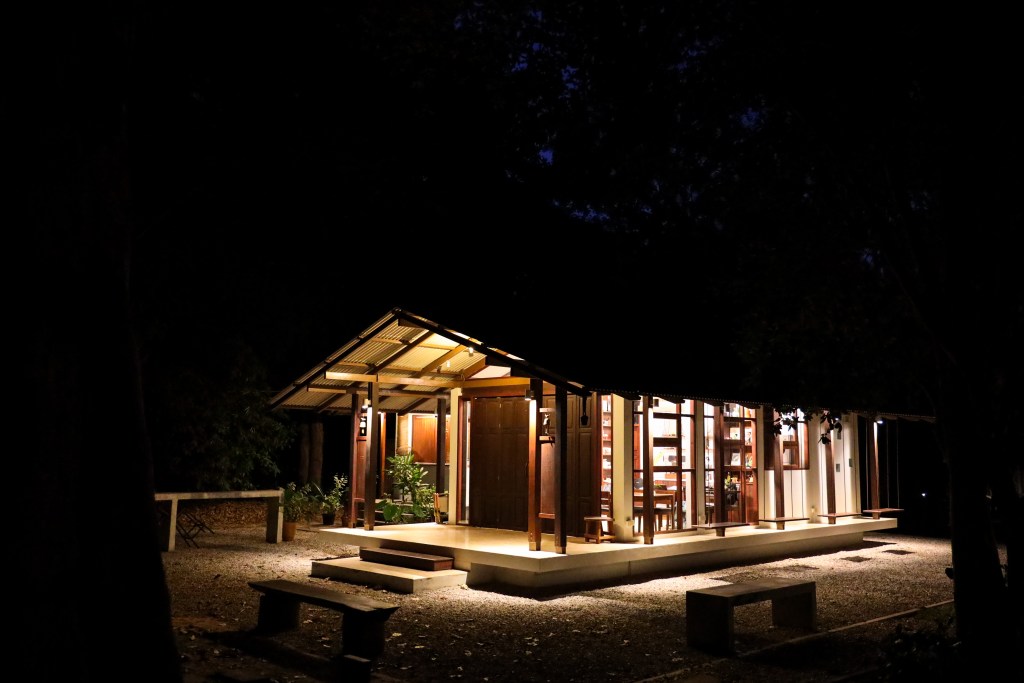
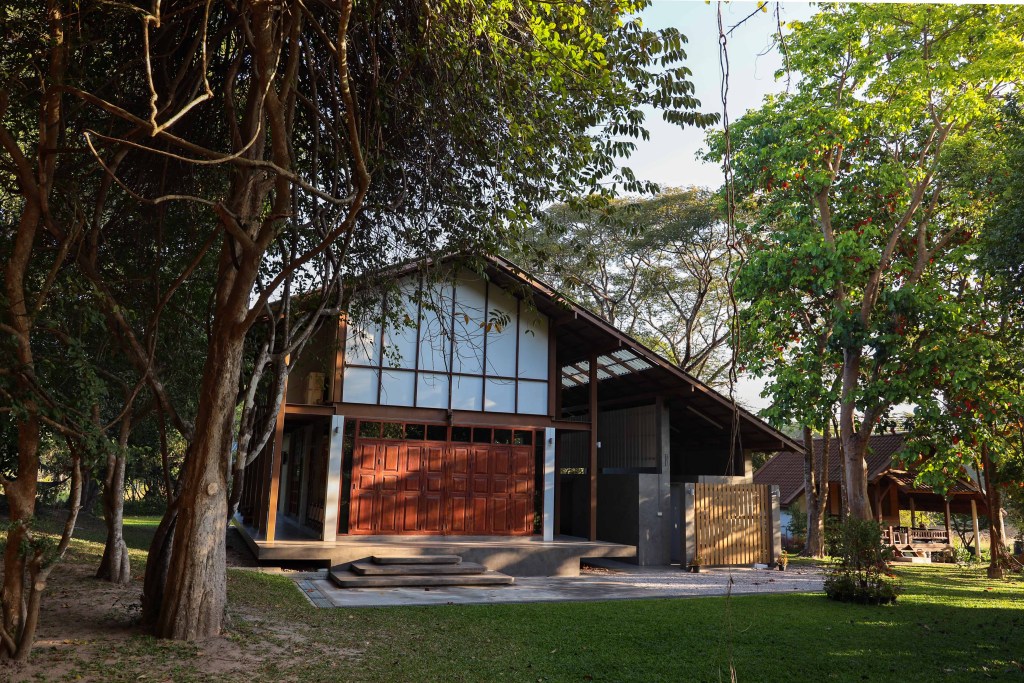
แบบที่ 1 พื้นที่อยู่อาศัยหรือใช้ประโยชน์ของมนุษย์ เราจำกัดการรุกล้ำของมนุษย์อยู่แค่พื้นที่โคกเดิม และนาเดิมที่ถมใหม่ให้กลายเป็นโคกเท่านั้น โดยเราจัดการให้มีความปลอดภัย สะอาด สวยงาม และสะดวกสบายพอสมควร นอกจากสิ่งปลูกสร้าง การใช้แสงและเสียงในเวลากลางคืนก็เป็นสิ่งที่เราใส่ใจ พยายามไม่ให้กิจกรรมของมนุษย์รบกวนสิ่งมีชีวิตอื่นที่อยู่รอบๆ มากเกินไป
Living space and human use: We limit human activity to the original raised ground and former rice fields that have been filled and reshaped into higher ground. In these areas, we aim to keep things safe, clean, beautiful, and reasonably comfortable. Beyond the buildings themselves, we are also mindful of light and sound at night, trying not to let human activity disturb the other lives that share this place more than necessary.


แบบที่ 2 พื้นที่ด้านในป่า เป็นพื้นที่อนุรักษ์พืช สัตว์ และดิน เราไม่แทรกแซงกระบวนการการจัดการตัวเองตามธรรมชาติของป่า มากสุดที่เราทำ คือ เก็บขยะเก่าๆ ที่ชาวบ้านในอดีตเคยทิ้งไว้ออกจากป่า ผูกป้ายต้นไม้ และทำเส้นทางเดินเล็กๆ เพื่อให้พอได้ศึกษานิเวศ ถ้ามีการแต่งกิ่งไม้หรือสางเถาวัลย์ต่างๆ ที่รบกวนต้นไม้ใหญ่ออกบ้าง ก็จะทำเมื่อมีผู้เชี่ยวชาญเรื่องการดูแลป่าช่วยชี้เป้าอย่างชัดเจนเท่านั้น
The inner forest: This is an area for the conservation of plants, animals, and soil. We do not interfere with the forest’s own natural processes of renewal and self-management. At most, we remove old rubbish left behind in the past, mark some trees, and make small walking paths for ecological learning. Any pruning or clearing of vines that may affect larger trees is done only when clearly advised by a forest care specialist.


แบบที่ 3 พื้นที่ชายป่า บางจุดมีพืชต่างถิ่นถูกปลูกไว้อยู่ก่อนแล้ว เราก็ใช้ประโยชน์จากบริเวณนี้แบบผสมผสานระหว่างการเกษตร ปลูกพืชอาหาร ไม้ใช้สอย พืชดอก เลี้ยงชันโรง เพื่อสร้างอาหาร สร้างรายได้ และความรื่นรมย์สวยงาม
The forest edge: In some parts of the forest edge, non-native plants had already been introduced before our care began. Here, we make use of the land in a mixed and modest way—growing food, useful plants, and flowering plants, while also keeping stingless bees. This part of the land provides for food, small income, and green lush beauty.


แบบที่ 4 พื้นที่เกษตร เราทำบนพื้นที่นาเดิม และนาถมใหม่เป็นโคกสำหรับปลูกพืช มีการปรับโครงสร้างดิน มีการไถพรวน การขุดสระ ใช้เครื่องจักรเครื่องทุ่นแรงบ้างเท่าที่จำเป็น วิธีการเพาะปลูกเราทำไปตามฤดูกาลแบบไม่ใช้สารเคมี หรือปุ๋ยเคมี พืชผักชนิดไหนเราเก็บพันธุ์ได้ก็เก็บพันธุ์เอง และปลูกหมุนเวียนไปเรื่อยๆ นอกจากในป่าแล้ว ในสระ ในนา แปลงผักของเรา หรือแม้แต่ดงหญ้ารกๆ ก็เป็นบ้านและแหล่งอาหารของสัตว์หลายชนิด
Agricultural land: Our farming areas are located on former rice fields and filled land that has been raised for planting. Here, we may improve soil structure, till the land, dig ponds, and use machinery where necessary. We grow according to the seasons, without chemical pesticides or synthetic fertilizers. Whenever possible, we save seeds ourselves and keep planting in rotation. Beyond the forest, our ponds, fields, vegetable plots, and even wilder grassy patches also serve as home and food sources for many kinds of animals.

Our Impermanent Existence
ป่านาคำหอม เป็นรอยต่อทางนิเวศ ภูพาน-หนองหาร ภูพานคือต้นน้ำ ภูเขาหินทราย หนองหารคือแหล่งน้ำหลักของเมือง….
ป่านาคำหอม เป็นรอยต่อ เมือง-ธรรมชาติ เมืองที่มีสิ่งอำนวยความสะดวกสำหรับมนุษย์เป็นหลัก ป่า ที่เหลืออยู่คือพื้นที่ที่สิ่งมีชีวิตอื่นๆ ยังพอจะได้เอื้อเฟื้อกัน….
ป่านาคำหอมเป็นรอยต่อของการเรียนรู้เรื่องภายนอก-การเรียนรู้เรื่องภายใน….
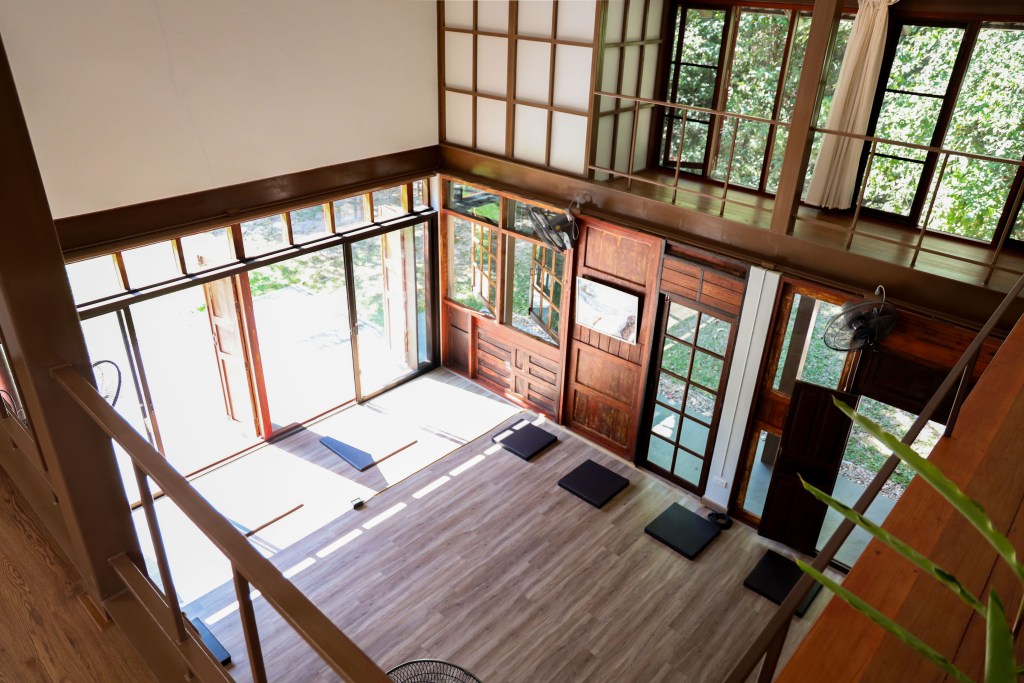
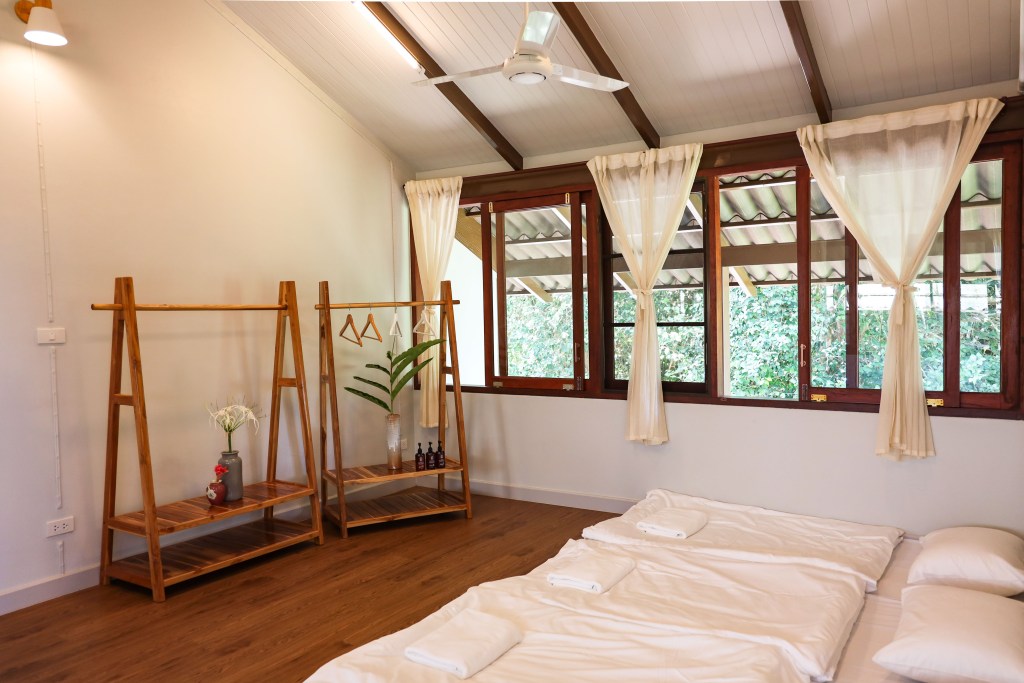
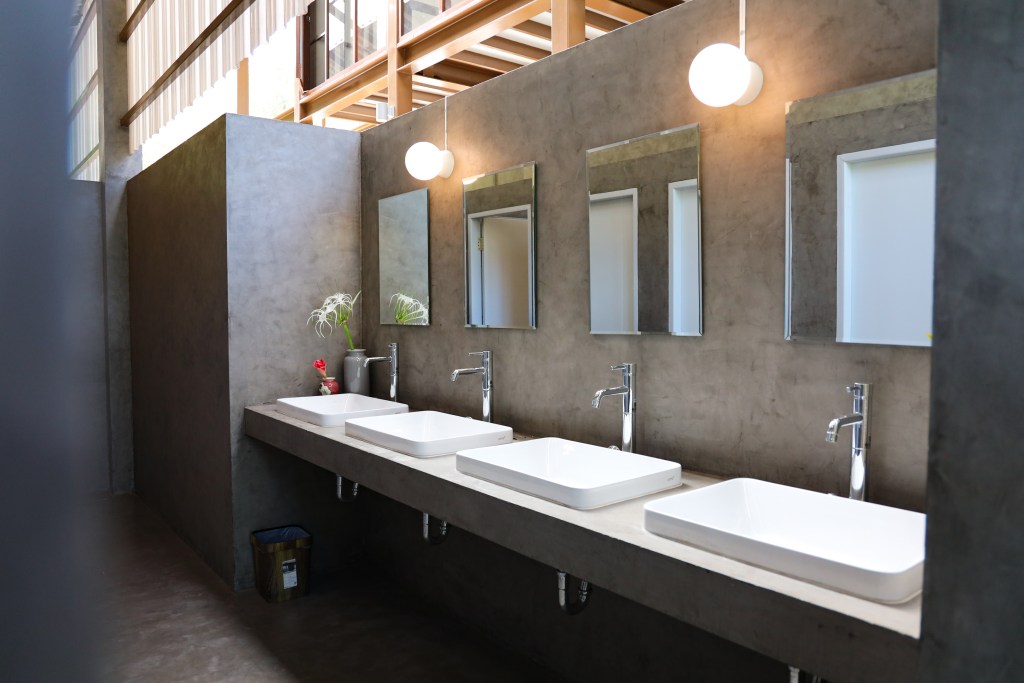
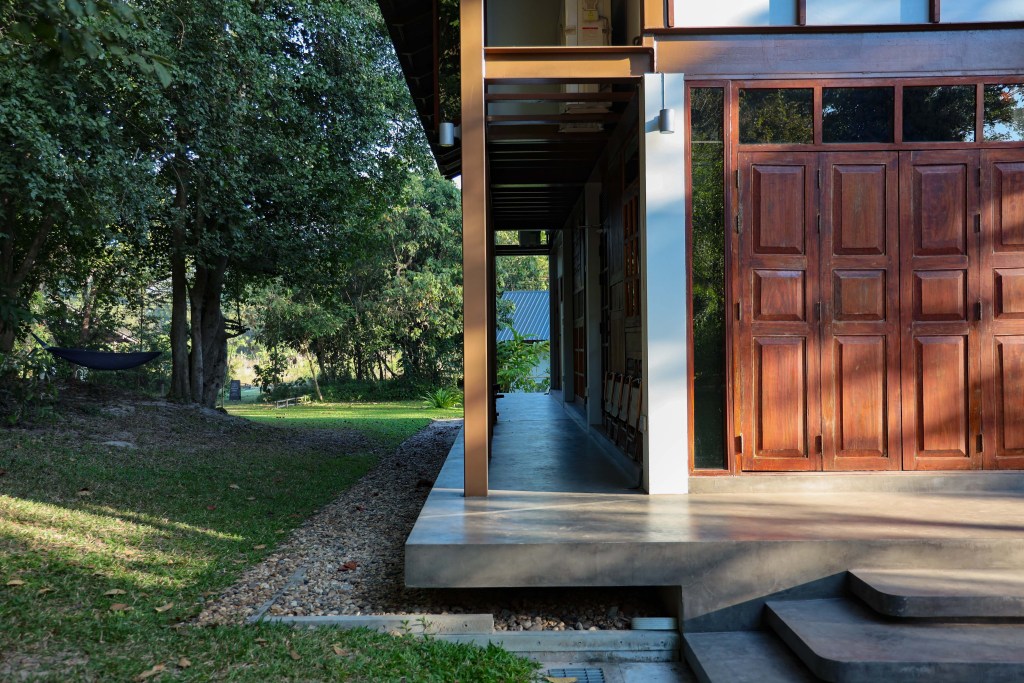
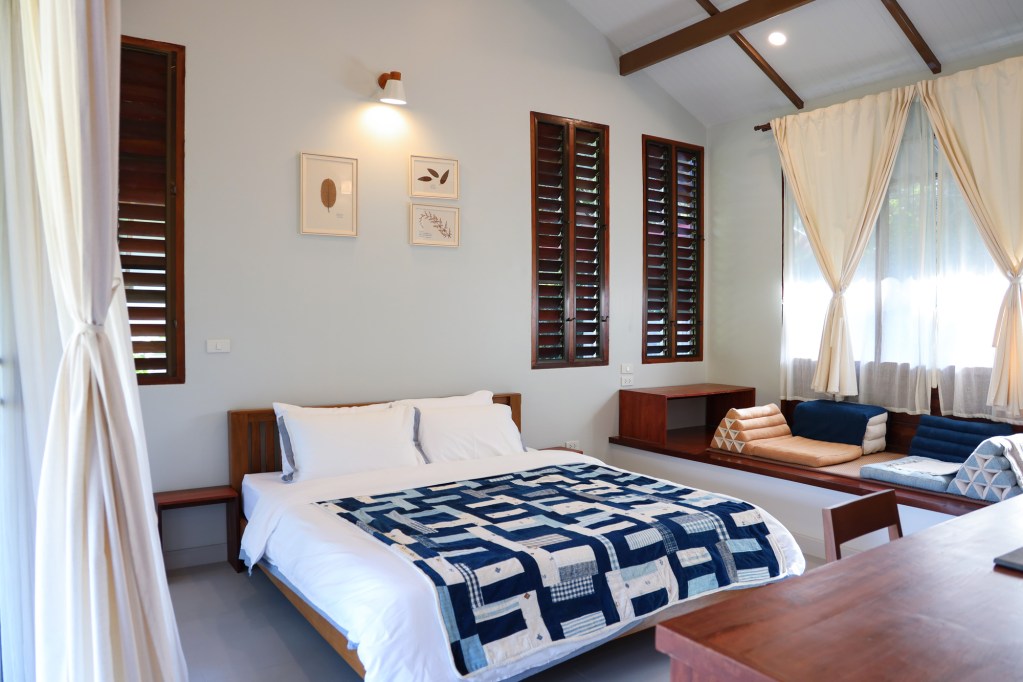
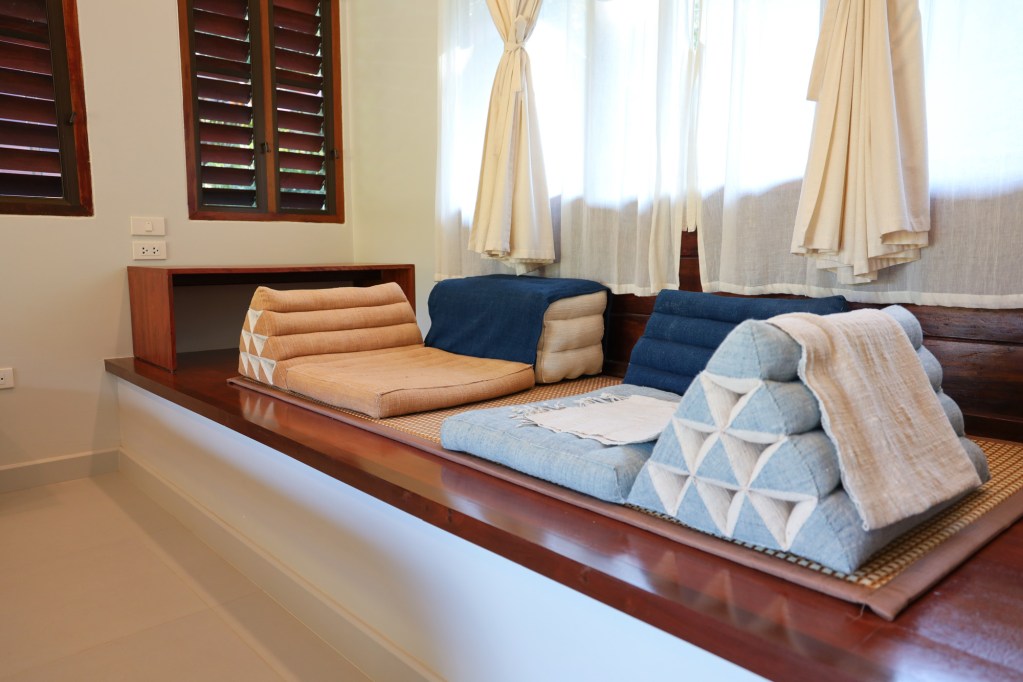
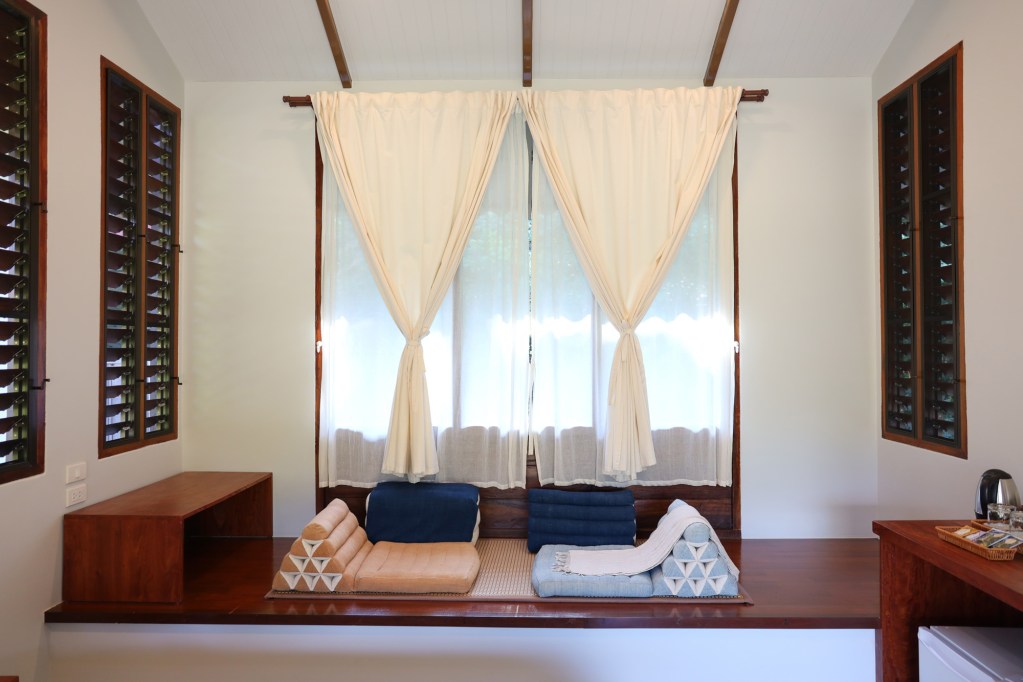
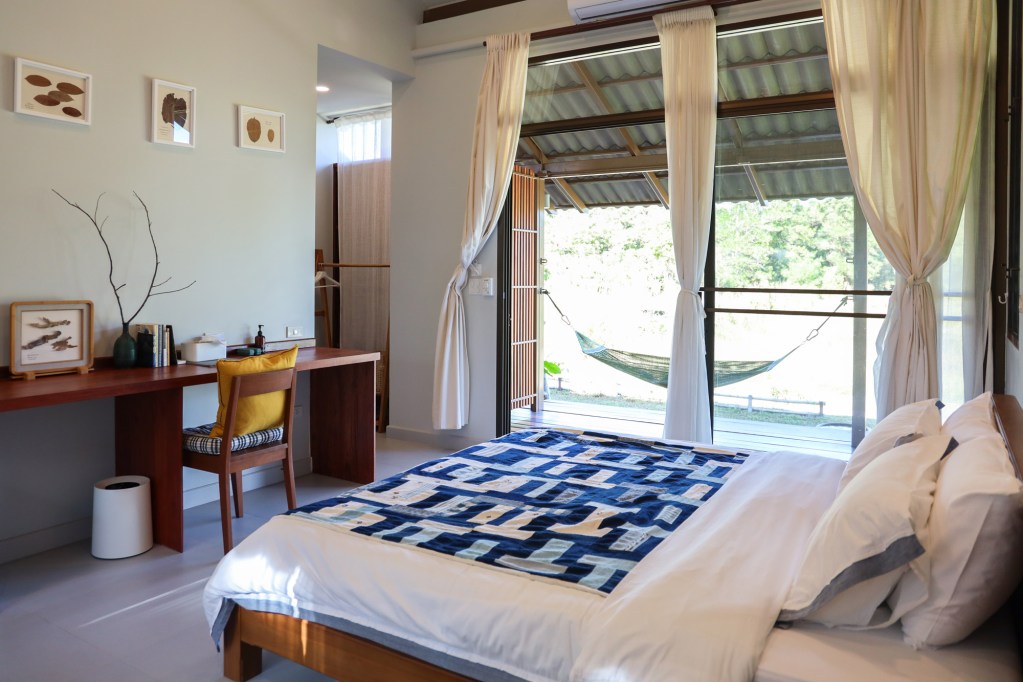
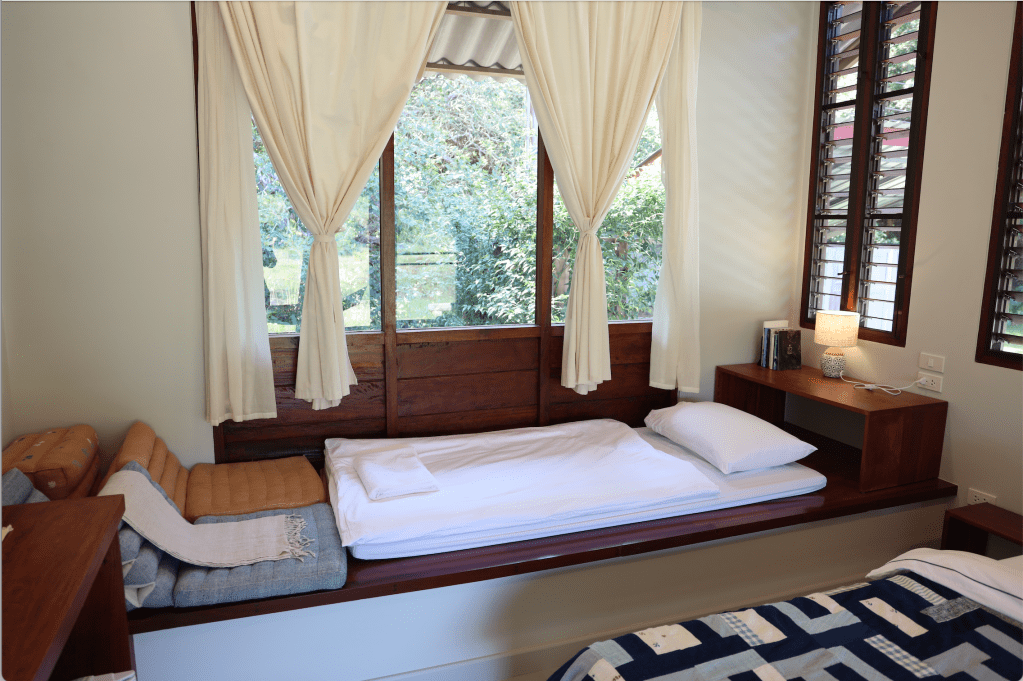
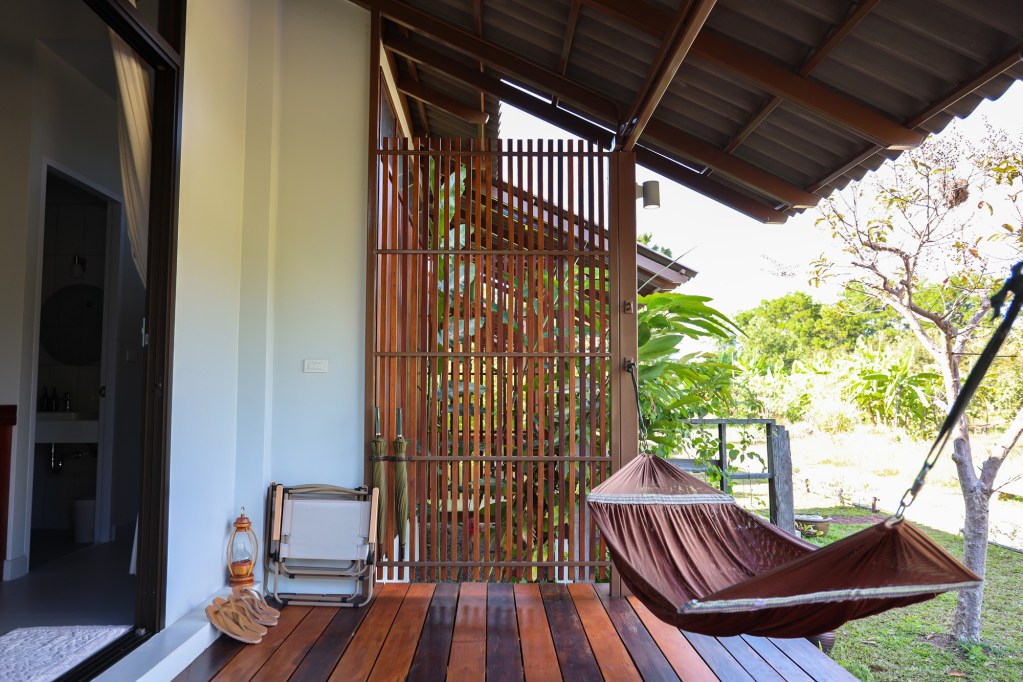
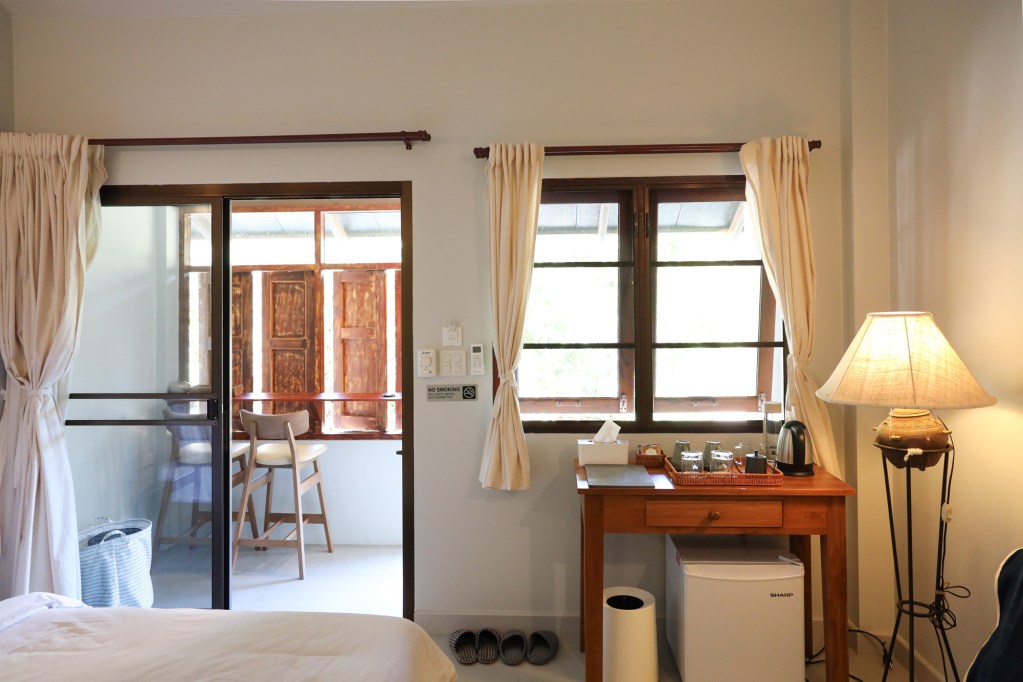
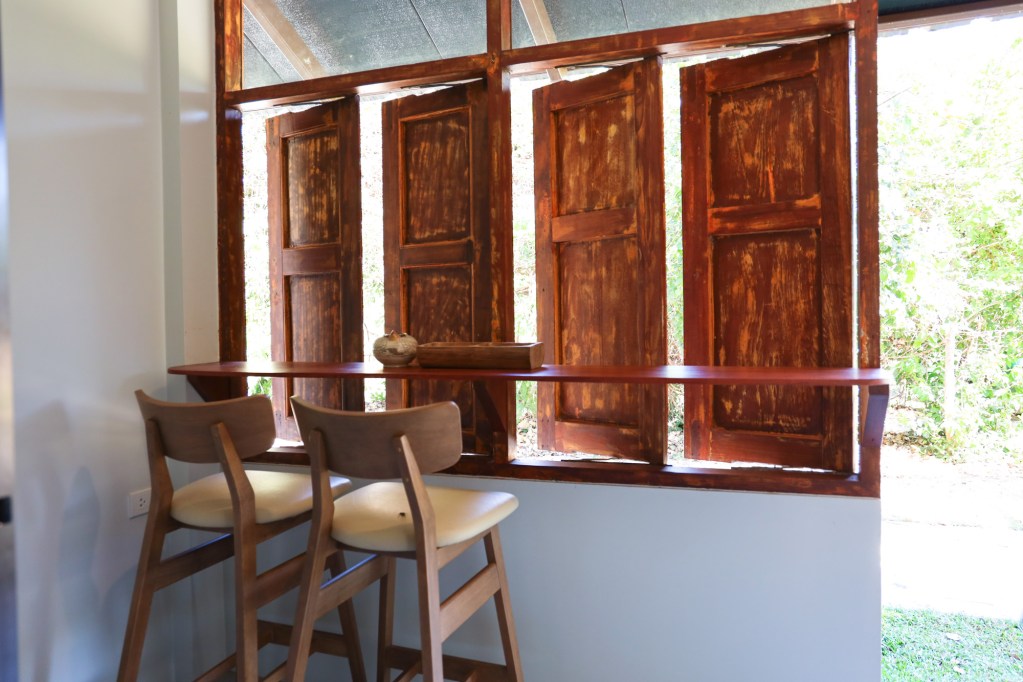
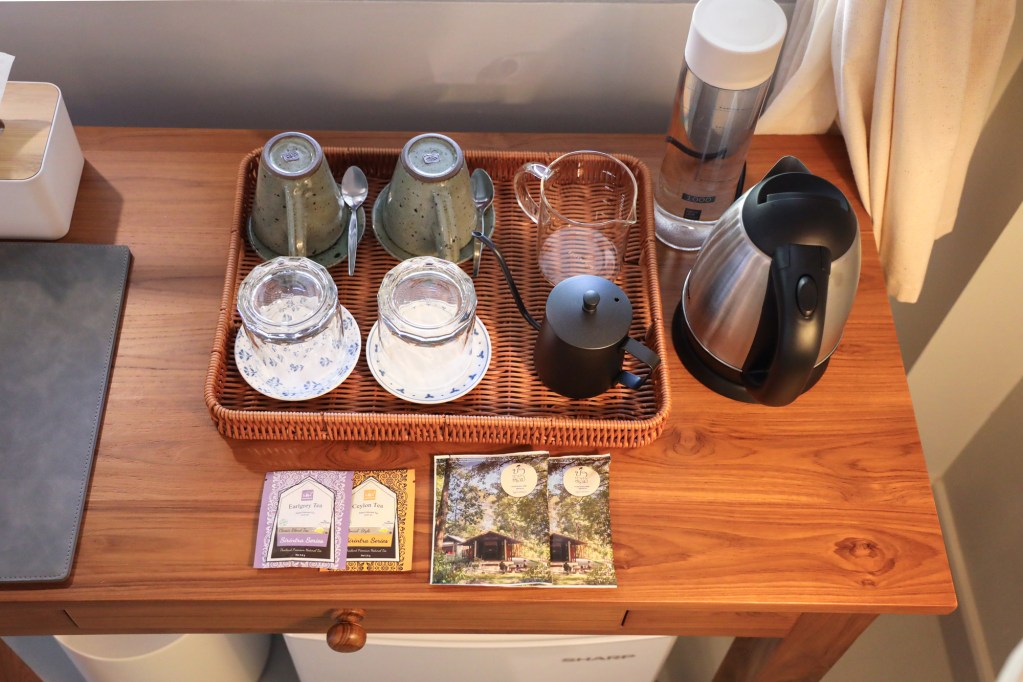
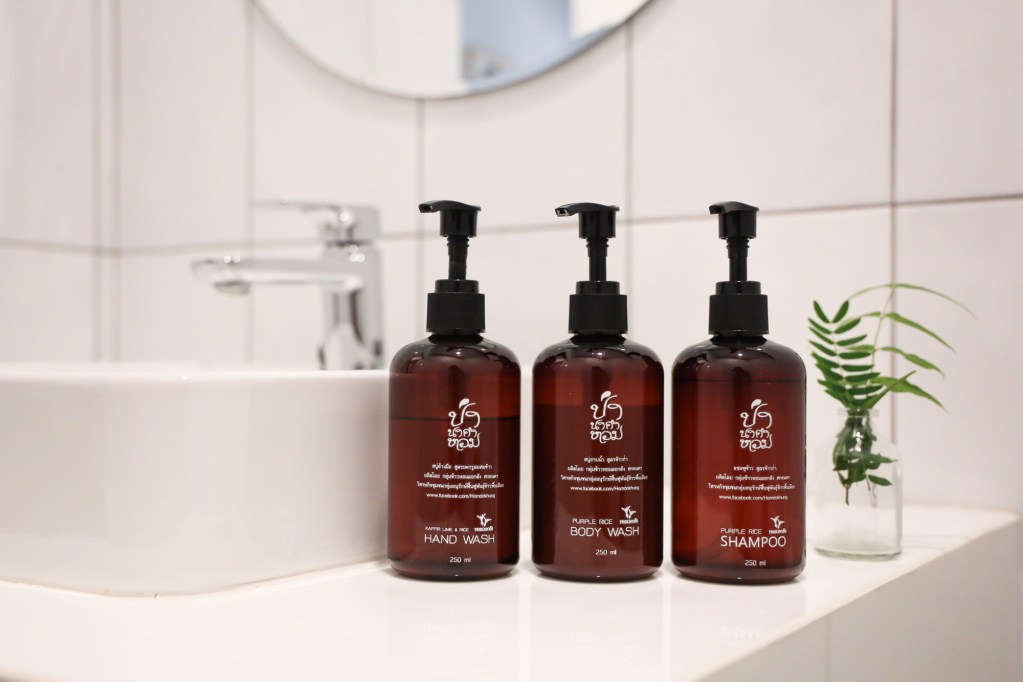
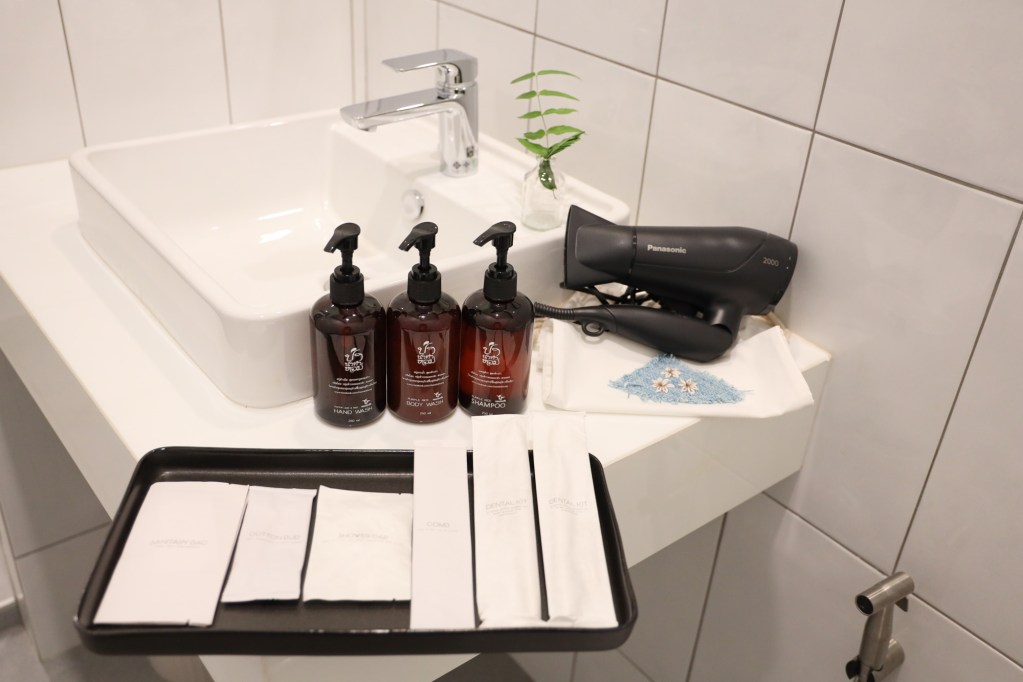
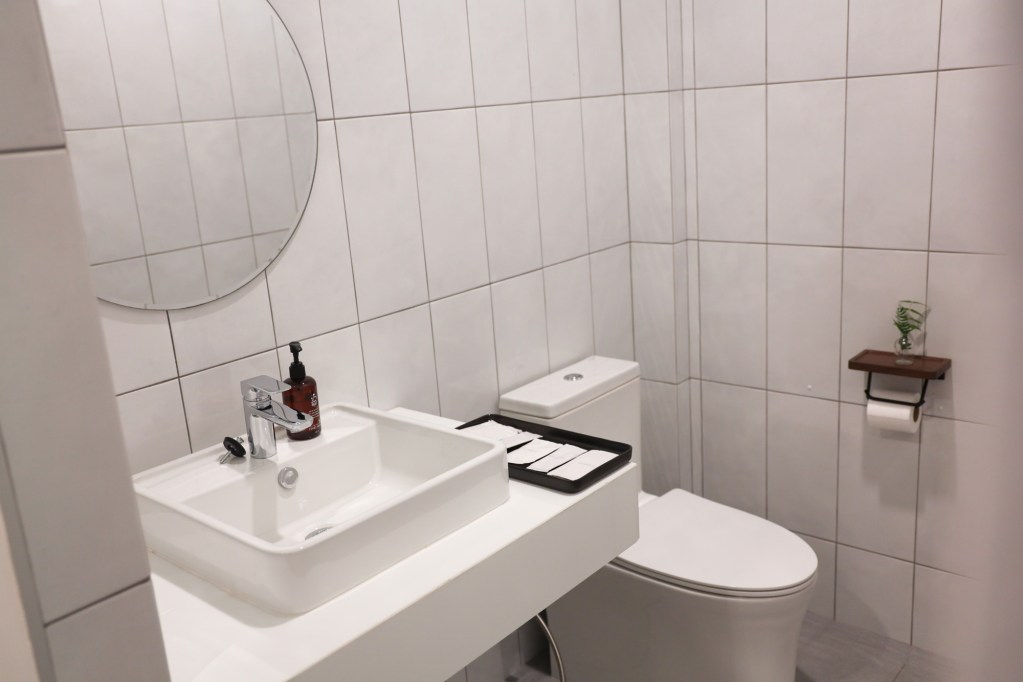
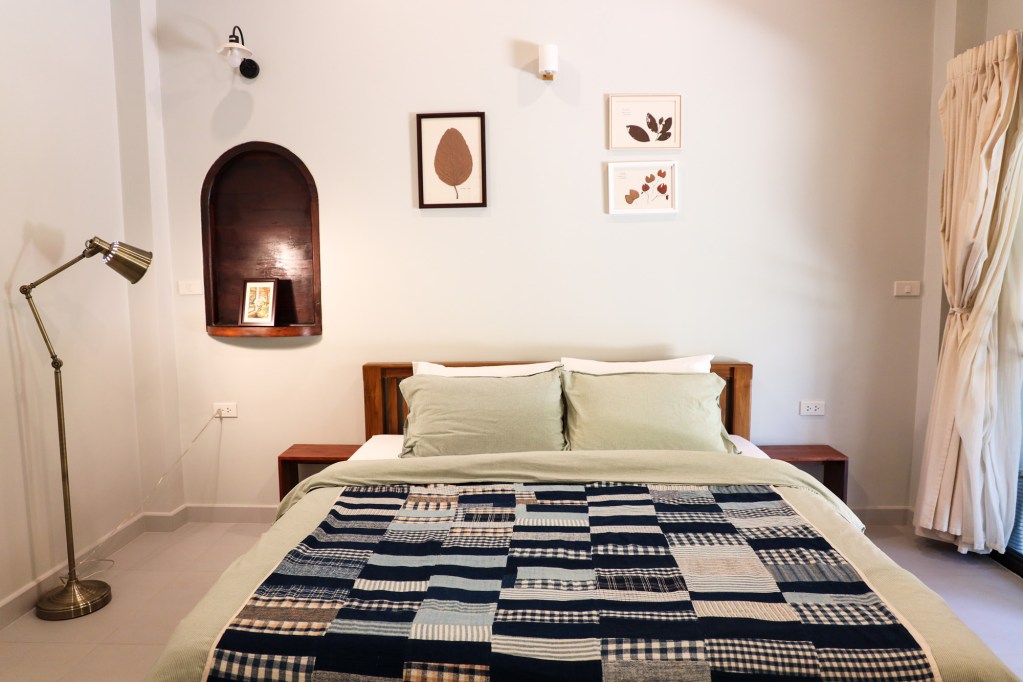
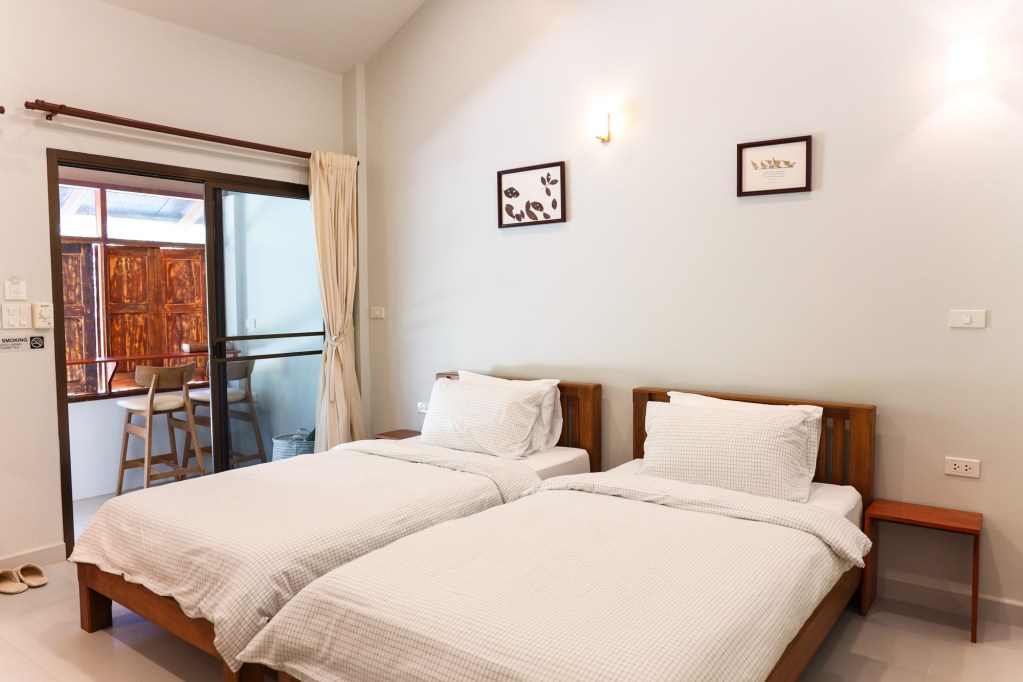
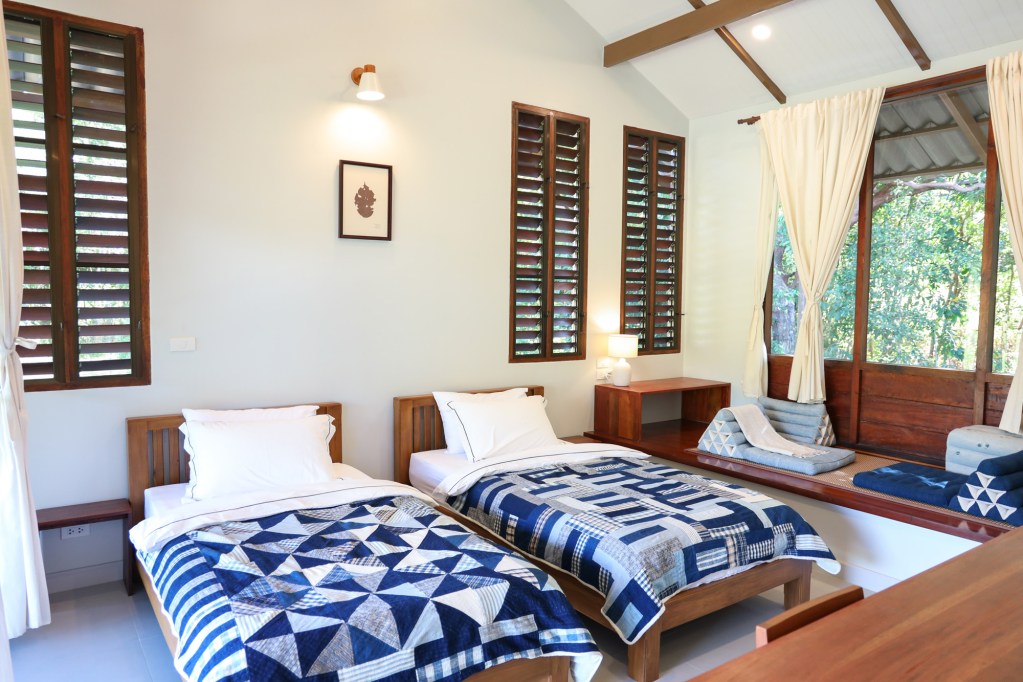
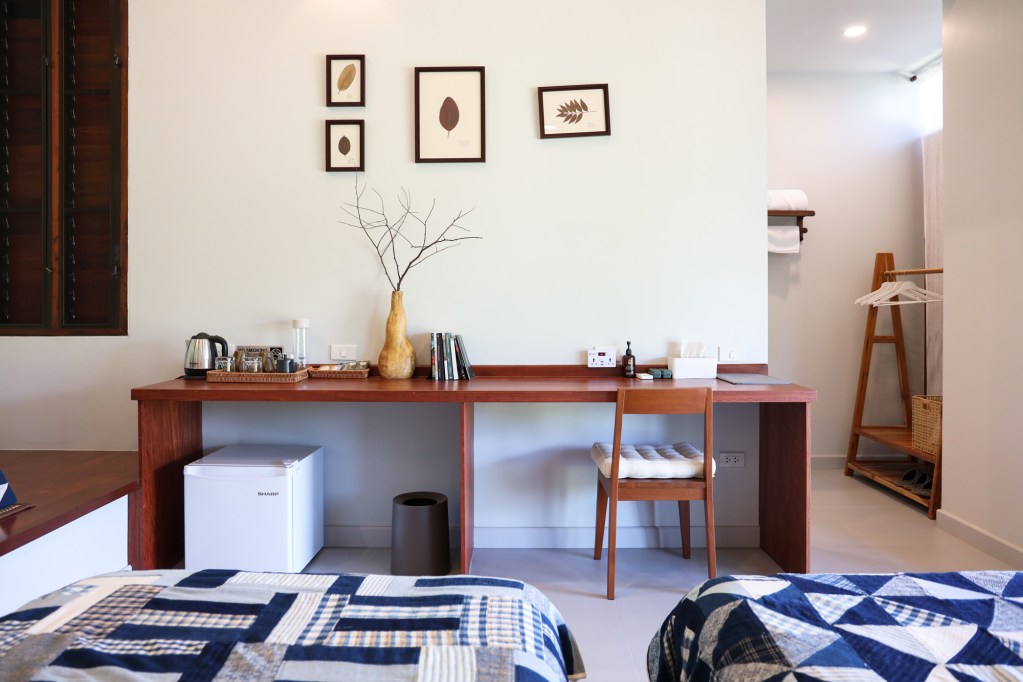
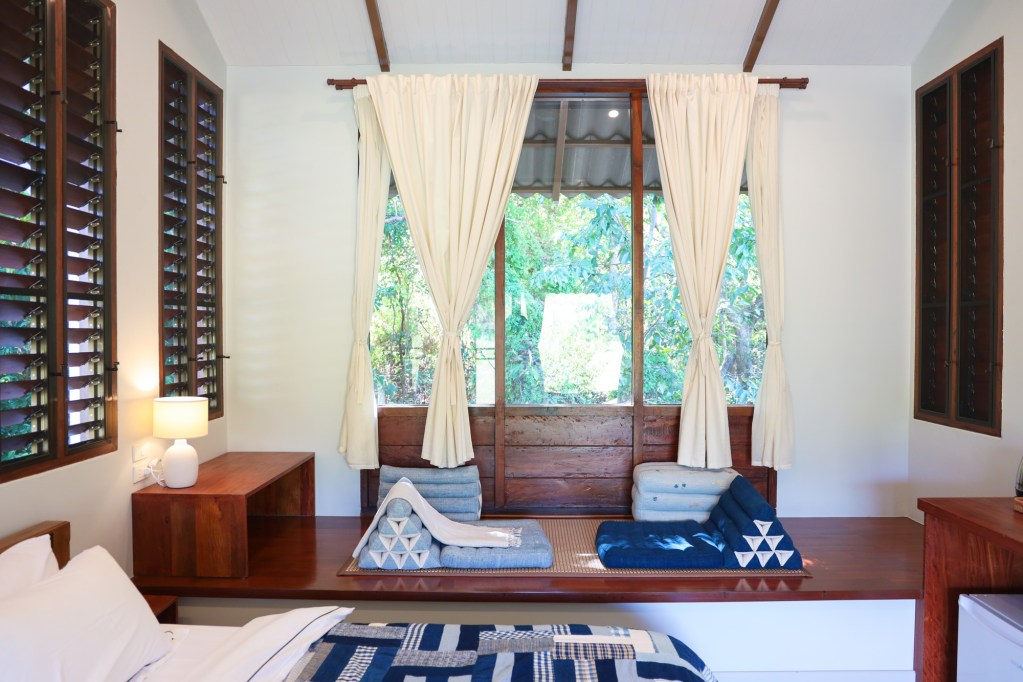
จุดที่ป่านาคำหอมอยู่ มันไม่ใช่ป่าที่ต้องหนีออกไปจากเมือง แต่เป็นส่วนหนึ่งของเมือง และเป็นพื้นที่เล็กๆ ที่ยังรักษานิเวศที่สมบูรณ์ได้ อยู่ที่นี่ไม่ได้ก่อฟืน ล่าสัตว์ หรือเดินขึ้นเขาไกลๆ ที่นี่เข้าถึงง่ายแต่ยังมีความเป็นส่วนตัว ภายในห้องพักมีสิ่งอำนวยความสะดวกอย่างดีด้วยความใส่ใจ
ที่นี่ไม่ใช่วัด แต่ก็สัปปายะพอสำหรับการหาความสงบและเอื้อต่อการใคร่ครวญ
Pa Na Come Home sits at an ecological threshold between Phu Phan and Nong Han. Phu Phan is the sandstone highland where water begins. Nong Han is the main water body that sustains the city.
Pa Na Come Home is also a threshold between city and nature: a city shaped mainly for human convenience, and a remaining forest where other forms of life still have room to live, rely on one another, and quietly continue.
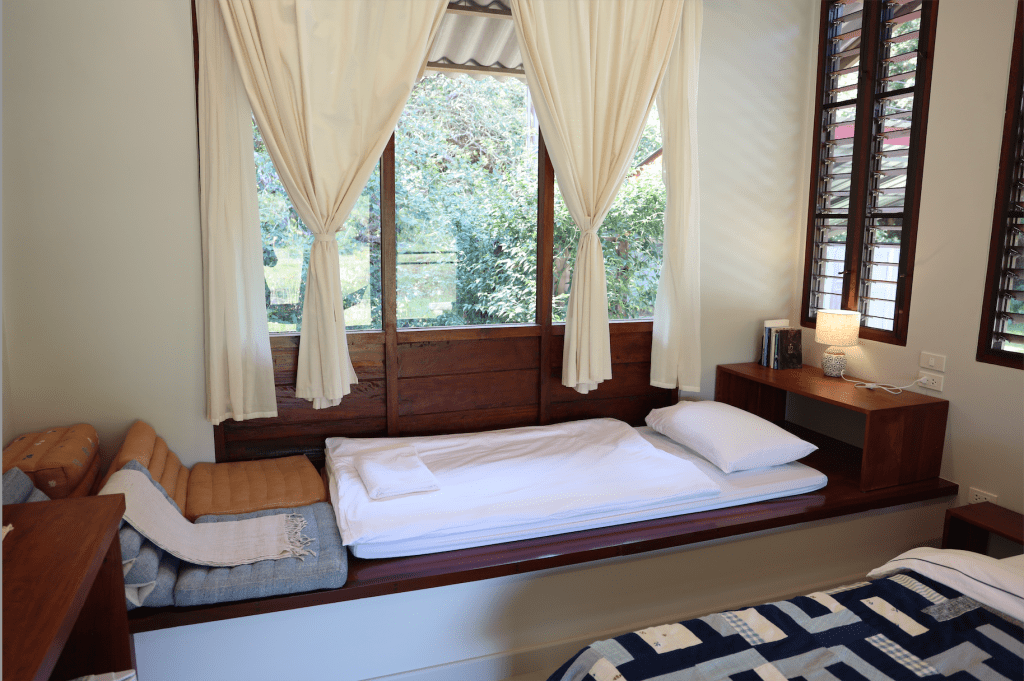
It is also a threshold between learning about the world outside and learning about the world within. Pa Na Come Home is not a forest you have to escape the city to find. It is part of the city itself, a small place that still holds an intact ecology. Here, you do not come to gather firewood, hunt, or trek deep into the mountains. It is easy to reach, yet still private. The rooms are carefully designed and well equipped, with comfort thoughtfully provided. This is not a temple, yet it is calm and conducive enough for rest, quiet, and reflection.
The Land’s Temporary Caretaker


อิ๋ม – รติกร ตงศิริ อิ๋มเกิดและโตที่เมืองสกลนคร ในครอบครัวที่ทำธุรกิจ หลังจากเรียนจบจากมหาวิทยาลัยในกรุงเทพ ได้ทำงานตามสายวิชาชีพเป็นเวลา 2-3 ปี ก่อนจะลาออกและเดินทางแสวงหาประสบการณ์อื่นๆ อีกเป็นเวลาเกือบ 2 ปี จนเมื่ออายุ 28 ได้กลับมาอยู่กับครอบครัวที่สกลนครและช่วยงานธุรกิจของครอบครัว เมื่ออายุย่าง 29 ปี (พ.ศ.2556) เริ่มมีความสนใจอยากมีทักษะในการผลิตอาหารที่ปลอดภัยด้วยตัวเอง ระหว่างทำงานช่วยที่บ้านก็ได้เสาะหาครูบาอาจารย์ด้านเกษตรไปด้วย และทดลองปลูกผักสวนครัวเล็กๆ หลังบ้านในเมือง ปีถัดมาก็เริ่มหัดทำนาอินทรีย์ ปลูกข้าวแปลงเล็กๆ ในที่ดินของพ่อที่บริเวณชุมชนหนองแดง (พ่อซื้อที่ดินผืนนี้ต่อจากคนกรุงเทพมาแล้วหลายปี) ก่อนจะค่อยๆ ขยาย ทยอยย้ายบ้านและการเพาะปลูกทั้งหมดตามมา โดยให้ชื่อสถานที่แห่งนี้ว่า “นาคำหอม”
เมื่อย้ายบ้านมาอยู่ที่ “นาคำหอม” ด้วยความเป็นพื้นที่ส่วนตัว จึงมีเพื่อนฝูงจากแวดวงเกษตรอินทรีย์คนทำงานสื่อ และเพื่อนสายงานคราฟต์แวะเวียนมาเที่ยว ทำธุระ ทำกิจกรรม และพักอาศัยด้วยบ่อยครั้ง จนกระทั่งปี 2562 พ่อของอิ๋มป่วยเป็นมะเร็งตับระยะสุดท้าย และได้เลือกมาใช้ชีวิต 2 สัปดาห์สุดท้ายที่นาคำหอมก่อนจะจากไป การได้เห็นวาระสุดท้ายของพ่อ การตระหนักว่าเราต่างมีเวลาจำกัด การใคร่ครวญว่าเราควรมีชีวิตอยู่อย่างไร เราควรเตรียมตัวอย่างไร เราควรเรียนรู้เรื่องใดบ้าง ประกอบกับรับรู้ถึงความเป็นห่วงของพ่อเรื่องความปลอดภัยในการใช้ชีวิตอยู่ในพื้นที่ติดป่า ทำให้อิ๋มมีความคิดทำโครงการ “ป่านาคำหอม” ขึ้นมา
“คนเรามักจะกลัวสิ่งที่เราไม่รู้จัก งั้นเราค่อยๆ ทำความรู้จักป่าผืนนี้ให้มากขึ้นก็แล้วกัน”
ความเป็นมาเป็นไปของโครงการ “ป่านาคำหอม” สัมพันธ์กับการเรียนรู้ของอิ๋มโดยตรง โชคดีมากที่อิ๋มเข้ามาในพื้นที่นี้ด้วยการทำเกษตรบนพื้นที่ที่เป็นทุ่งนาเดิมและแทบไม่ได้ยุ่งกับส่วนที่เป็นป่าเลย การที่มนุษย์เข้าไปจัดการป่าโดยขาดความรู้ความเข้าใจนั้นมีโอกาสสูงมากที่มนุษย์จะทำลายความสมดุลของระบบนิเวศ (ดีใจที่เราไม่ใช่คนขยัน เพราะถ้าขยันกว่านี้ป่าคงเสียหายมาก)
ก่อนหน้านี้เรารู้ตามหลักการว่าป่าเป็นของดี รับรู้ด้วยความคิดว่าป่าเป็น “วัตถุที่มีประโยชน์” เรามองเขาเป็น “ทรัพยากร” ที่เรามี เวลาผ่านไป เมื่อเราตั้งใจที่จะอยู่กับเขาและเรียนรู้เรื่องเขามากขึ้น เราเห็นรายละเอียดอื่นๆ ป่าไม่ใช่ก้อนวัตถุที่ไร้หัวใจ และป่าไม่ได้มีชีวิตเดียว ในทางกายภาพเราอาจจะสนใจว่าพื้นที่ป่ากี่ไร่ มีต้นไม้อะไรกี่ต้น พืชแต่ละอย่างเอาไปทำอะไรได้บ้าง ป่าตอบแทนเราอย่างไร ระยะต่อมาเราสัมผัสได้ถึงความพอใจเมื่อได้รับไอเย็นจากป่า ได้ยินเสียงนกร้อง แมลงกรีดปีก ได้มองกะรอกสีขาวที่ไต่ไปตามกิ่งต้นโมกมัน เห็นเงาของใบไผ่ที่ไหวอยู่บนพื้น เห็นต้นตะแบกเปลี่ยนสี เห็นผลของต้นตาเป็ดตาไก่สีแดงสดตัดกับพุ่มหนาสีเขียวเข้มที่ร่องน้ำชายป่า เห็นเมล็ดต้นสมอพิเภกงอกเป็นต้นสีเขียวเล็กๆ หลังพายุฝนผ่านไป ตื่นเต้นที่เห็นงูสายม่านไล่ล่าเขียดตะปาด ยินดีที่ได้เห็นขี้กระต่าย 3-4 กองบนสนามหญ้า เห็นพืชหน้าตาแปลกๆ ที่จะโผล่มาให้เราเห็นเฉพาะบางฤดูกลาล เห็นกล้วยไม้ป่าตกลงมากับพื้นพร้อมกิ่งไม้ใหญ่ที่หัก เห็นต้นไม้โค่นเพราะดินบวมน้ำ เห็นว่าหลายอย่างผ่านมาแล้วก็ผ่านไป แล้วก็อาจจะวนกลับมาใหม่เมื่อสภาพแวดล้อมเหมาะสม เห็นว่าเราไม่ได้เห็นทุกอย่าง มีหลายอย่างที่หายไปอย่างเงียบๆ โดยที่เราไม่ทันสังเกต และไม่รู้ว่าจะกลับมาอีกไหม แล้วก็อีกมากมายที่เราไม่รู้ถึงการมีอยู่หรือ “เคย” มีอยู่ของเขาด้วยซ้ำ
การใช้ชีวิตวนเวียนอยู่กับป่านาคำหอมทำให้อิ๋มได้รู้จักกับเพื่อนที่เชื่อมโยงตัวเองเข้ากับธรรมชาติในทางจิตวิญญาณหลายๆ คน การได้สัมผัสเขาเหล่านั้นทำให้เราเห็นว่าเส้นทางการเรียนรู้เรื่องนี้นั้นกว้างใหญ่และลึกซึ้งเหลือเกิน
เราทุกคนไม่จำเป็นต้องสนใจเรื่องธรรมชาติในระดับเดียวกันก็ได้ แต่นอกเหนือจากความพยายามที่จะรักษาชีวิตเราอยู่ให้รอดปลอดภัยบนโลกใบนี้ เรื่องอารมณ์ความสุขความทุกข์ ความรุ่มร้อนหรือโปร่งเย็น ความวูบไหวหรือมั่นคงภายในใจเราเอง เป็นสิ่งที่อิ๋มสนใจและเชื่อว่าคนอีกมากมายก็สนใจ เราแต่ละคนน่าจะมีทั้งความปรารถนาและความกลัวบางอย่างในใจไม่ต่างกัน การเรียนรู้ที่จะอยู่กับสิ่งเหล่านี้ให้เป็นจึงสำคัญ และลึกๆ เราเองก็รู้สึกได้ว่า ในระหว่างทางของการเรียนรู้นั้น ภายในของเรามีความสัมพันธ์กับร่างกาย และเชื่อมโยงกับสิ่งที่กว้างและยิ่งใหญ่กว่าร่างกายเราแบบที่ยากจะอธิบาย การยอมรับตามความเป็นจริงว่าสิ่งเหล่านี้มีอิทธิพลต่อจิตใจจะนำไปสู่การฝึกเพื่อความเป็นอิสระจากสิ่งเหล่านี้ได้เช่นเดียวกับเรื่องอื่นๆ
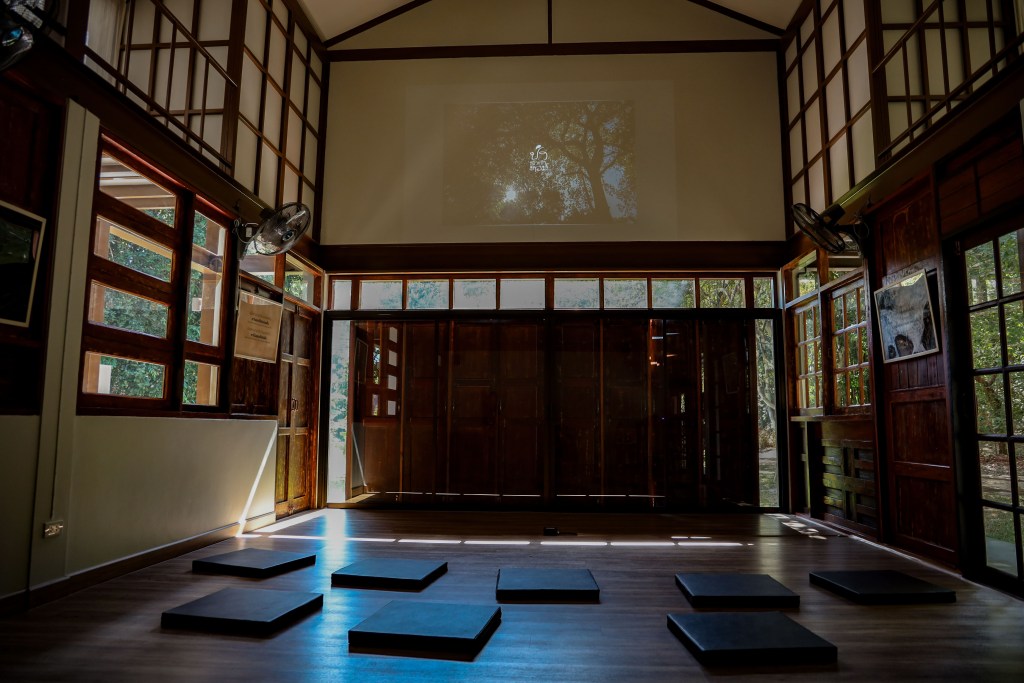
อิ๋มตั้งใจทำให้ป่านาคำหอม เป็นพื้นที่ที่เอื้อต่อการเรียนรู้แลกเปลี่ยนกันระหว่างผู้คน ธรรมชาติ และตัวเอง นอกจากจัดที่พักให้ใกล้ชิดกับธรรมชาติและมีความเป็นส่วนตัวเหมาะแก่ใช้เวลาเรียนรู้ด้วยตัวเองแล้ว ก็ยังเตรียมพื้นที่ไว้สำหรับการประชุมหรือทำกิจกรรมกลุ่มในบางโอกาสด้วย ตามเจตนารมย์และความเหมาะสมของพื้นที่เราจึงกำหนดเอาไว้ว่า ให้เป็นกิจกรรมประเภทที่เกี่ยวข้องกับสุขภาพกาย สุขภาพใจ สุนทรียะ และสิ่งแวดล้อม เครือข่ายคนจัดกิจกรรมประเภทเหล่านี้สามารถติดต่อสอบถามเพื่อจัดกิจกรรมกลุ่มเล็กๆ ได้
Im — Ratikorn Tongsiri
Im was born and raised in Sakonnakhon in business family. After graduating from university in Bangkok, she worked in her field for 2-3 years before traveling to explore other life experiences for another 2 years. At the age of 28, she returned to Sakonnakhon to live with her family and help with the family business.
Around the age of 29, in 2013, she became interested in safe food production. While helping at home, she also began seeking out teachers in natural farming and started experimenting with a small kitchen garden behind her house in the city. The following year, she began learning organic rice farming on a small plot of her father’s land in the Nong Daeng community, land he had bought years earlier from a Bangkok owner. Over time, the cultivation gradually expanded, and the home itself was slowly moved there as well. She named this place Na Come Home.
As life settled into Na Come Home, its solitude and serenity naturally drew friends from the organic farming community, media circles, and the craft world to visit, work, hold activities, and occasionally stay over.
Then, in 2019, Im’s father was diagnosed with terminal liver cancer and chose to spend the final two weeks of his life at Na Come Home before he passed away. Witnessing her father’s final days, becoming more aware of the limits of our time, and reflecting on how we should live, prepare, and learn, together with his concern for the safety of living beside a forest, led Im to begin what would become the Pa Na Come Home project.
“People often fear what they do not know. So perhaps we should slowly get to know this forest more deeply.”
The story of Pa Na Come Home is closely tied to Im’s own path of learning. Fortunately, she first entered this land through farming on what used to be rice fields and left the forest itself almost untouched. When people intervene in a forest without understanding it, there is a high chance they will damage the balance of its ecology. In that sense, it was perhaps lucky that she was never too eager to manage it.
At first, she understood in principle that forests were valuable. She thought of them as resources that she owned to be used. But over time, by living beside the forest and learning from it more attentively, she began to notice something else. A forest is neither an inanimate object nor a single life form. At the physical level, we may ask how many rai it covers, how many trees it contains, what each plant is good for, and how the forest can serve us. But slowly, another relationship begins to take shape.
There is the quiet satisfaction of cool air rising from the trees. The sound of birds calling and insects vibrating through the evening. The sight of a white squirrel moving along the branches of a tree. Shadows of bamboo leaves shifting across the ground. A tabaek tree changing colour. The bright red fruit of ta pet ta kai against the deep green thicket along the forest edge. Small seedlings of samo phiphek appearing after a passing storm. The sudden excitement of seeing a snake hunt a frog. The simple joy of finding signs of rabbits on the lawn. Strange plants that appear only in certain seasons. Wild orchids fallen to the ground with broken branches. Trees uprooted by waterlogged soil. The realization that many things come and go, and may return again only when conditions allow.
And there is also the realization that we do not see everything. Some things disappear quietly before we ever notice. Some may return, and some may not. Many lives remain unknown to us, including lives that may once have existed here and are already gone.
Living in close rhythm with Pa Na Come Home has also brought Im into contact with many people who relate to nature in a deeply spiritual way. Meeting them has shown her how vast and profound this path of learning can be.
Not everyone needs to care about nature in the same way or to the same degree. But beyond the effort to keep ourselves safe and alive in this world, there is also the question of our inner life: our happiness and sorrow, our restlessness and ease, our instability and inner steadiness. These are things that deeply interest Im, and she believes they matter to many others as well.
Each of us carries certain hopes and certain fears. Learning how to live with them is important. And somewhere along that path, it becomes possible to feel that our inner life is connected not only to the body, but also to something wider and greater than ourselves, in ways that are difficult to explain. Simply recognizing that these forces shape the mind may be the beginning of practising greater freedom in relation to them.
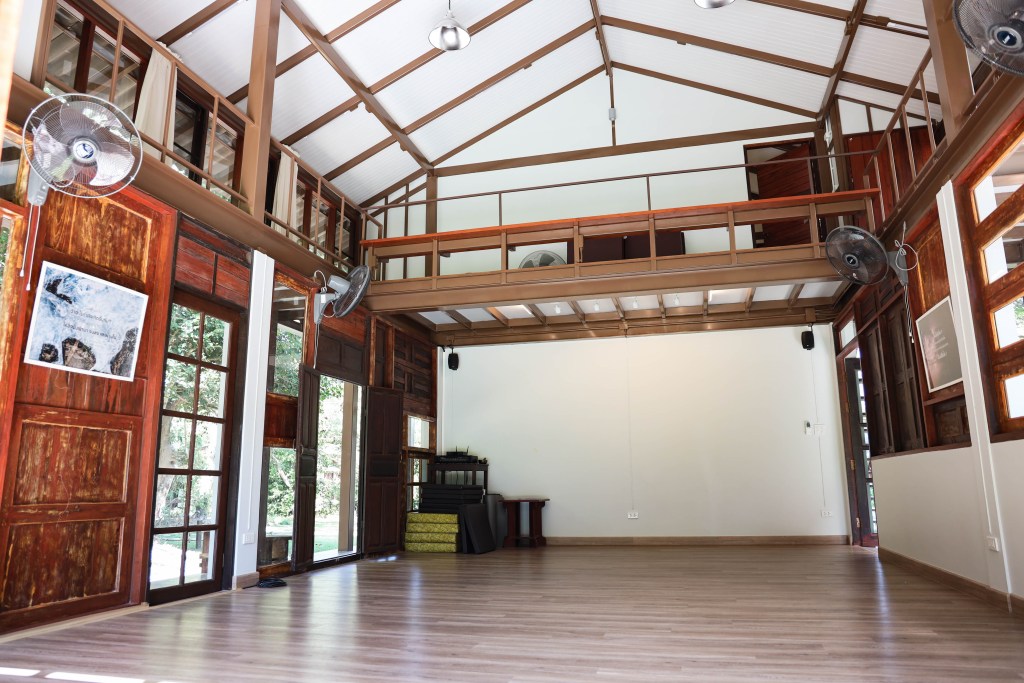
Im’s intention for Pa Na Come Home is to make it a place that supports learning and exchange between people, nature, and the self. In addition to providing private accommodation close to nature for those who wish to spend time quietly on their own, the space is also prepared, on certain occasions, for small meetings and group activities.
In keeping with the spirit of the place and the limits of the land, these activities are intended to relate to physical wellbeing, mental wellbeing, aesthetics, and the environment. Networks and facilitators working in these areas are welcome to get in touch on holding small-group activities here.